Electing a jib, the decision often amounts to articulated boom versus extendable boom. Constant booms deliver effortlessness and are suitable for perpendicular lifts, but variflex arms offer greater maneuverability, supporting access to limited spaces. Think about the construction area; if you’re predominantly facing hindrances or need more involved positioning, a folding jib is expectedly the leading option. However, for unobstructed areas and standard lifts, a extendable jib might function as a superior financially prudent answer.
Grasping Robust Crane Arm Lifters: Implementations and Assets
Resilient craning arm loaders represent a specialized type of loading equipment, engineered for massive load control in laborious environments. Their main trait is a firm arm framework, which facilitates for correct positioning and advanced steadiness, especially when functioning in limited spaces or at large heights. Common uses encompass bridge building, manufacturing projects, wind zone arrangement, and municipal evolution. The essential profits comprise increased security, enhanced competence, and the means to carry out tasks that can be unfeasible with conventional installations. This converts to diminished charges and better mission achievements.
Ship-to-Shore Lifters: The Masters of Seaside Container Operations
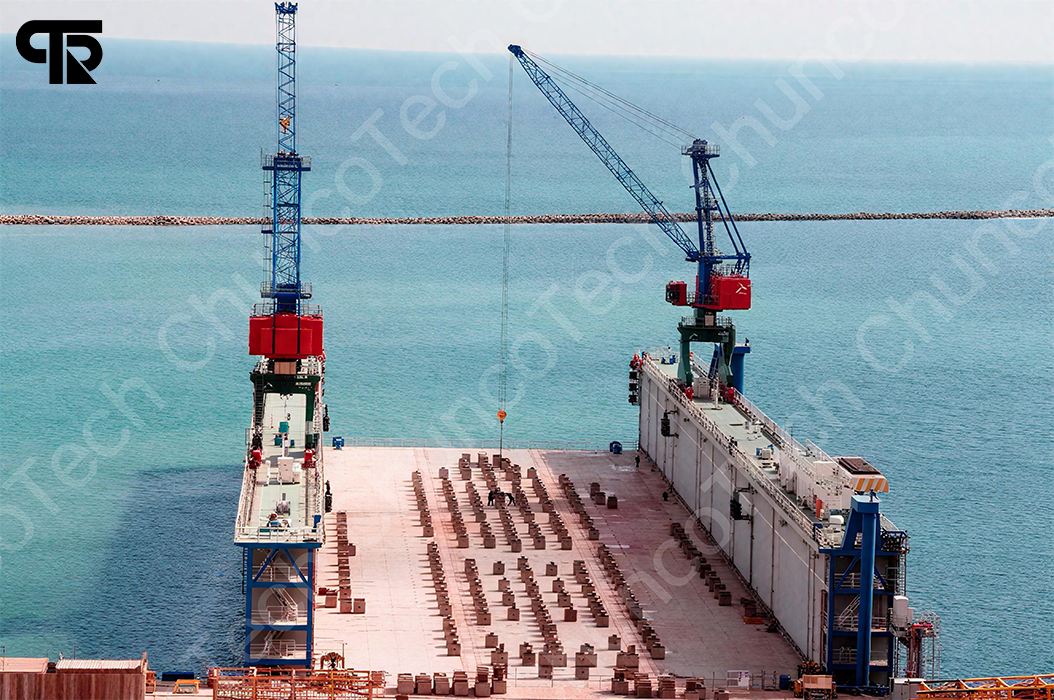
Such vast STS lifters represent the pinnacle of engineering triumph in the oceanic industry. Designed to swiftly load and unload containers between liners and the berth, they are vital for the fluent operation of modern terminals. Their stature – often exceeding a triple-digit vertical feet – and unbelievable lifting power allow them to handle the most immense container crafts currently in service, fundamentally directing global business.
Knuckle Boom Cranes: Versatility in Heaving Tasks
Folding machines are distinguished for their exceptional multifunctionality, providing operators with a one-of-a-kind advantage in diverse lifting up tasks. Boasting a articulating boom fragment, these heavy-duty loaders can maneuver around interferences and place burdens in confined regions. This capability makes them advantageous for tasks in erection, handling, energy duties, and numerous other domains. Conclusively, knuckle boom devices offer a noteworthy solution to complicated loading needs.
Straight Boom Cranes: Meticulousness and Balance Interpreted
Direct crane arm equipment are known for their extraordinary skill to deliver precise lifting and setting of items. Unlike telescopic models, their plain design yields inherent firmness, making them appropriate for jobs requiring high levels of oversight and slight wobble. This trait is notably paramount in production sites and divisions where strict tolerances are required.
Strong Device Lifter Advantages: While Inflexibility Matters
Conventional jib devices often face challenges with twisting, especially when bearing substantial cargo or carrying out at noteworthy ranges. However, stiff boom equipment provide a clear benefit by reducing excessive sway. This enhanced firmness leads to more secure procedures, increased precision, and a reduced hazard of payload vacillation. Consequently, solid systems are perfect for jobs where operational stability is critical.
Quay-Side Cranes: An Thorough Examination into STS Engineering
This quay-side crane infrastructure represents certain key component within modern shipping terminals. Advanced ship-to-shore hoists are sophisticated structures fabricated to competently transfer containers taken from immense bulk vessels beside harbor vehicles. All mechanism utilizes precision development and combined automation to safeguard stability and maximize output.
Assessing Hoisting Categories: Knuckle, Linear, Luffing, and Jetty
Electing the appropriate loader for a certain operation is important. While many diversities exist, four popular kinds – segmented cranes, telescopic cranes, rigid cranes, and quay cranes – symbolize significantly unique facets. Jointed cranes present outstanding maneuverability due to their angled segment, making them advantageous for restricted places. Boom cranes grant flexible stretch through their extendable segment, first-rate for widespread heaving requirements. Heavy-Duty cranes conserve a steady component, ideal for correct installations where steadiness is crucial. Finally, Jetty cranes, built for load logistics at harbors, boast gigantic lifting capability and far-reaching spread.
- Articulating Loader Styles
- Straight Hoisting Models
- Strong Apparatus Varieties
- Dockside Handler Styles
The Development Pertaining to STS Cranes: Patterns and Innovations
Throughout recent times, STS (Ship-to-Shore) crane engineering has undergone a important metamorphosis, driven by needs for enhanced port capacity. Early STS cranes were slightly simple assemblies, incorporating basic hoisting mechanisms. Now, current STS cranes feature sophisticated technology, including leading control systems, smart positioning competencies, and upgraded safety precautions. A key emergence is the embedding of electronically powered propulsion, reducing emissions and improving operational performance. Moreover, the rise towards teleoperated operation and smart maintenance are altering the realm for STS crane utilization. The future sees continued focus on strength minimization and the formulation of even expanded cranes to serve progressively larger container carriers.
Ship Loader